Can AI Really Cut Water Treatment Costs by 30%?
Can intelligent water treatment control really slash operating costs by 30%? That’s the bold claim we hear from plant managers and sustainability officers across high-tech manufacturing. In this deep dive, we’ll unpack the technology, share real numbers from the field, and answer that question with a resounding yes—when implemented correctly. Stick with us as we explore how AI-driven control is reshaping water treatment from a cost center into a strategic advantage.
Imagine this: It’s 3 a.m. at a semiconductor fab in Dresden. The shift engineer notices that the ultrapure water (UPW) system’s resistivity has dipped below spec. Within minutes, an intelligent control platform predicts a resin exhaustion event and automatically adjusts regeneration cycles, averting a costly production halt. By morning, the plant manager reviews the dashboard and sees that chemical consumption dropped by 12% overnight—without any manual intervention. This is the promise of intelligent water treatment control: a system that learns, predicts, and optimizes in real time.
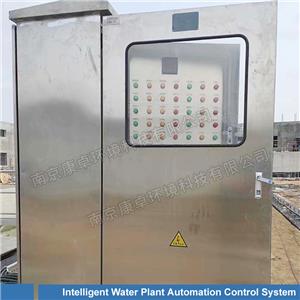
But can it truly deliver a 30% reduction in overall water treatment costs? In our experience working with manufacturers worldwide, yes—and often more. The key lies in moving beyond reactive maintenance and fixed schedules to a dynamic, data-driven approach. In this blog, we’ll break down the pain points that traditional systems struggle with, detail the technical solutions that intelligent control offers, and showcase concrete examples from companies that have achieved remarkable savings. We’ll also address common concerns from engineers and procurement managers, and provide actionable steps to evaluate this technology for your own facility.
The Hidden Costs of Traditional Water Treatment
Before we dive into solutions, let’s examine the pain points that plague conventional water treatment operations. These are the silent budget drains that intelligent control aims to eliminate.
Pain Point 1: Chemical Overdosing and Waste
In a typical plant, chemical dosing for coagulation, disinfection, or scale inhibition is often based on conservative setpoints or manual adjustments. Operators, wary of underdosing and its consequences (e.g., membrane fouling or microbial growth), tend to err on the side of caution. The result? Overdosing by 15–25% is common. For a mid-sized manufacturing facility spending $500,000 annually on treatment chemicals, that translates to $75,000–$125,000 wasted each year. Worse, excess chemicals can harm downstream processes and increase sludge disposal costs. The environmental impact is significant, too: unnecessary chemical production and transport add to the carbon footprint.
Pain Point 2: Unplanned Downtime and Equipment Failure
Water treatment systems are critical utilities; when they fail, production stops. A reverse osmosis (RO) membrane that fouls prematurely due to poor pretreatment can cost $10,000–$50,000 in replacement, plus lost production that can run into millions per day for high-value manufacturing. Traditional monitoring relies on periodic manual sampling and reactive maintenance, meaning problems are often detected too late. For example, a pharmaceutical plant in Ireland experienced a biofilm outbreak in its loop that forced a 48-hour shutdown for sanitization, costing €800,000 in lost output. Such events are preventable with continuous, intelligent monitoring and predictive analytics.
Pain Point 3: Energy Inefficiency
Pumping, aeration, and membrane filtration are energy-intensive. In conventional systems, pumps often run at fixed speeds, and aeration is controlled by simple timers or dissolved oxygen (DO) probes with limited turndown. This leads to excess energy consumption—typically 20–30% higher than necessary. For a large wastewater treatment plant, energy can represent 30% of operating costs; a 20% reduction could save hundreds of thousands annually. Additionally, energy peaks may coincide with utility demand charges, further inflating bills. Without intelligent control, plants miss opportunities to shift loads or optimize processes in response to real-time energy pricing.
These pain points are interconnected: overdosing chemicals can lead to membrane fouling (downtime), and inefficient pumping wastes energy. Intelligent water treatment control addresses them holistically by leveraging data from sensors, historical trends, and predictive models to make real-time adjustments.
How Intelligent Control Changes the Game
At its core, intelligent water treatment control combines advanced sensors, data analytics, and machine learning to automate and optimize treatment processes. Let’s see how it tackles each pain point.
Solution 1: Adaptive Chemical Dosing
Instead of fixed setpoints, intelligent systems use real-time water quality data (e.g., turbidity, pH, ORP, conductivity) and predictive models to determine the exact chemical dose needed. Machine learning algorithms continuously learn from historical data and adjust dosing to maintain optimal conditions with minimal chemical use. For instance, a coagulation control system might use streaming current detectors and AI to predict the optimum coagulant dose, reducing consumption by up to 25%. Additionally, the system can anticipate changes in raw water quality (e.g., after a storm) and preemptively adjust dosing, avoiding underdosing and ensuring compliance. The result: chemical savings of 15–30%, reduced sludge, and lower environmental impact.
Solution 2: Predictive Maintenance and Fault Detection
Intelligent control platforms continuously monitor equipment health using vibration analysis, pressure differentials, and other sensor data. Machine learning models detect subtle deviations that precede failures, alerting operators to impending issues. For example, a rising pressure drop across an RO membrane might indicate fouling; the system can trigger a cleaning cycle before performance degrades. This predictive approach reduces unplanned downtime by up to 70% and extends equipment life. Moreover, the system can automatically isolate faulty components and reconfigure processes to maintain output, minimizing production impact. In one case, a food & beverage plant avoided a $200,000 loss when the system predicted a pump failure and scheduled replacement during a planned shutdown.
Solution 3: Energy Optimization
Intelligent control optimizes energy use by dynamically adjusting pump speeds, aeration rates, and filtration cycles based on real-time demand and energy prices. For example, variable frequency drives (VFDs) on pumps can be controlled by AI to maintain optimal pressure while minimizing energy consumption. In aeration systems, advanced control algorithms use DO sensors and ammonia measurements to deliver precise air flow, cutting energy by 20–40%. The system can also participate in demand response programs, reducing load during peak pricing periods. A municipal wastewater plant in California implemented intelligent aeration control and saved $150,000 annually in energy costs, with a payback period of 18 months.
These solutions are not just theoretical—they are proven in the field. But how do they integrate with existing infrastructure? Intelligent control platforms are designed to be retrofitted, using IoT sensors and edge computing to connect legacy equipment. They can operate standalone or integrate with SCADA systems, providing a seamless upgrade path.
Real-World Results: Case Studies
Let’s look at how companies have benefited from intelligent water treatment control, with specific data and quotes.
Case Study 1: Semiconductor Fabrication in Taiwan
A leading semiconductor foundry in Hsinchu struggled with UPW system variability, leading to occasional resistivity excursions that threatened yield. After implementing an intelligent control system from Nanjing Kangzhuo Environmental Technology Co., Ltd., they achieved a 22% reduction in chemical consumption for regeneration and a 15% decrease in energy use. More importantly, unplanned downtime due to water quality issues dropped by 80%. “The predictive capabilities have given us a level of confidence we never had before,” said Dr. Chen, the facility’s utilities manager. “We’re now able to focus on expanding production rather than firefighting water issues.”
Case Study 2: Automotive Paint Shop in Stuttgart, Germany
A major automaker’s paint shop required large volumes of demineralized water for paint preparation. The existing RO system was running at 65% recovery, wasting water and chemicals. Intelligent control optimized the RO process, increasing recovery to 80% and reducing antiscalant dosing by 28%. Annual savings: €180,000 in water and chemicals, plus €50,000 in energy. “The system paid for itself in less than two years,” noted Klaus Müller, the plant’s environmental engineer. “And the reduced water intake aligns with our sustainability goals.”
Case Study 3: Pharmaceutical Manufacturing in Cork, Ireland
A biopharma facility faced frequent sanitization cycles due to biofilm growth in its purified water loop. Intelligent control introduced continuous monitoring of microbial activity via online sensors and predictive models that adjusted biocide dosing and flow rates to prevent biofilm formation. The result: sanitization frequency dropped from monthly to quarterly, saving €120,000 annually in labor and chemicals, and reducing downtime by 30%. “We were skeptical at first, but the data speaks for itself,” said Siobhan O’Connor, the site’s quality assurance lead. “The system has become indispensable for maintaining our water quality.”
Case Study 4: Food & Beverage Plant in California, USA
A large beverage bottler in Fresno implemented intelligent control on its wastewater treatment plant to reduce energy and chemical costs. The system optimized aeration and chemical dosing, cutting energy use by 25% and polymer consumption by 20%. Additionally, the plant avoided $75,000 in fines for effluent violations thanks to real-time compliance monitoring. “The ROI exceeded our expectations,” said Mark Johnson, the plant manager. “We’re now evaluating expanding the system to other lines.”
These case studies illustrate the tangible benefits across industries. But what about the technology behind it? Let’s compare traditional and intelligent control approaches in a table.
| Aspect | Traditional Control | Intelligent Control |
|---|---|---|
| Chemical dosing | Fixed setpoints, manual adjustments | AI-optimized dosing based on real-time quality data |
| Maintenance | Reactive or scheduled | Predictive, condition-based |
| Energy use | Fixed speeds, timers | Dynamic optimization, demand response |
| Downtime | High, unplanned | Low, planned |
| Data utilization | Limited, siloed | Integrated, cloud-based analytics |
Applications and Partnerships
Intelligent water treatment control is applicable across a wide range of high-tech manufacturing and municipal applications. Key scenarios include:
- Ultrapure water production for semiconductors, pharmaceuticals, and power plants.
- Wastewater treatment for manufacturing facilities, food & beverage, and municipalities.
- Cooling water systems in data centers, HVAC, and industrial processes.
- Boiler feedwater for steam generation.
- Desalination plants for potable water supply.
Nanjing Kangzhuo Environmental Technology Co., Ltd. has established partnerships with leading equipment manufacturers and system integrators to deliver intelligent control solutions globally. For example, we collaborate with a major pump manufacturer to integrate our control algorithms into their variable frequency drives, ensuring seamless optimization. We also work with sensor providers to ensure high-fidelity data acquisition. These partnerships enable us to offer turnkey solutions that are robust, scalable, and easy to deploy.
Our clients include Fortune 500 companies in electronics, automotive, and pharmaceuticals, as well as municipal utilities. By combining deep domain expertise with advanced AI, we help our partners achieve their sustainability and operational goals.
FAQ for Engineers and Procurement Managers
Q1: How does intelligent control handle sensor drift and data quality issues?
A1: Sensor drift is a valid concern. Our system employs automated calibration checks and cross-validation between redundant sensors. Machine learning models detect anomalies and flag sensors for maintenance. Additionally, we use soft sensors (virtual sensors) that infer parameters from other measurements, reducing reliance on physical sensors. Data quality is continuously assessed, and the system can operate in a degraded mode if a sensor fails, ensuring uninterrupted control.
Q2: What is the typical payback period for an intelligent control system?
A2: Payback periods vary based on plant size and existing infrastructure, but most clients see ROI within 18–36 months. For large facilities with high chemical and energy costs, payback can be as short as 12 months. We offer a free ROI assessment to help you estimate savings for your specific site.
Q3: Can the system integrate with our existing SCADA and PLCs?
A3: Yes. Our platform is designed for interoperability and supports standard protocols such as Modbus, OPC UA, and Ethernet/IP. We can interface with any major PLC or SCADA system, and we provide gateways for legacy equipment. Integration is typically straightforward and can be done in phases to minimize disruption.
Q4: How do you ensure cybersecurity for cloud-based control?
A4: Cybersecurity is paramount. We employ end-to-end encryption, secure authentication, and regular security audits. Our cloud infrastructure is hosted on AWS/Azure with industry-standard certifications (e.g., ISO 27001). For clients with stringent requirements, we offer on-premises edge computing solutions that keep data local while still providing advanced analytics.
Q5: What kind of support and training do you provide?
A5: We provide comprehensive training for operators and engineers, including hands-on workshops and online modules. Our support team is available 24/7 for remote troubleshooting, and we offer optional on-site service contracts. We also provide regular software updates that include new features and improvements based on customer feedback.
Conclusion and Call to Action
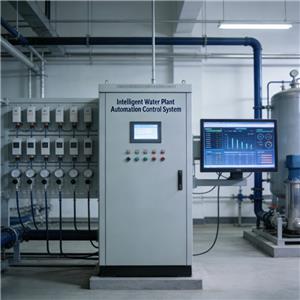
Intelligent water treatment control is not just a buzzword—it’s a proven pathway to significant cost savings, operational resilience, and sustainability. By addressing chemical waste, unplanned downtime, and energy inefficiency, facilities can achieve 30% or greater reductions in operating costs while enhancing compliance and environmental performance.
If you’re ready to explore how intelligent control can transform your water treatment operations, we invite you to download our technical whitepaper, “Achieving 30% Cost Reduction with AI-Driven Water Treatment Control.” This in-depth document provides detailed methodology, case studies, and a step-by-step guide to implementation. Alternatively, contact our sales engineers to schedule a consultation and receive a customized ROI analysis for your facility. Don’t let your water treatment system remain a cost center—turn it into a competitive advantage today.